"Raphael was amazing! Knowledgeable, friendly, good at explaining. Trip was great despite the heat. Value for money"
Roma Termini · High-Speed Rail · Both Cities in a Day
Pompeii and Herculaneum Tour From Rome
Rome is the furthest of the seven origins people search from, and it is the only one where the transport is a bigger decision than the tour. This is what the day actually looks like from Termini, and the two moments where it is worth reconsidering.
Top rated
From
$236
per person
Free cancellation
- 4.8 / 5 460+ Reviews
- 70 Min Rome to Naples, Per the Operator
- Both Tickets Included, Skip-the-Line
- Free Cancellation
The Experience
What the Rome Departure Includes
Straight from the operator's own listing — the round-trip rail, the ground transport in Campania, both entrance tickets and the guiding at each site.
Highlights
- See the key buildings in both sites
- Learn the story of the Roman city and the people buried by the Vesuvius eruption
- Pick up insights from your archeologist guide
- Marvel at plaster casts of animals and people who died in Pompeii
What's Included
- Guided tours with an archaeologist in both Pompeii and Herculaneum
- Pompeii Express" entry tickets
- Herculaneum entry tickets
- Round-trip fast-train tickets from Rome to Naples
- Transportation from Naples train station to Pompeii, Herculaneum, and back by van or minibus
- Exclusive branded welcome kit and discount card for Maximall Pompeii giving access to special offers
- Headsets for all participants
How the Rome Day Actually Runs
Train south, minibus to Pompeii, break, minibus to Herculaneum, train back. The order matters more than the brochure suggests.
Pick Your Origin Before You Pick Your Tour
This is the decision that shapes the whole day, and almost every listing skips it. From Naples the round trip is short enough that both sites get a full two hours. From Rome you are adding roughly 140 minutes of train travel on top of the same visit. From Sorrento, Salerno or the Amalfi Coast you are further out again. Choose the origin first; the tour follows from it.
Do Herculaneum First, If You Can
The Naples departure runs Herculaneum in the morning and Pompeii after the break, and that order is the right way round. Herculaneum is small, dense and shaded by its own excavation pit; Pompeii is vast and almost entirely exposed. Doing the big open site in the afternoon of a Campanian summer is the single most common regret in the reviews.
Cross Between the Two Sites
The two sites sit on the same railway at the base of Vesuvius, and the crossing between them is the one number in this whole day that never varies: EAV's timetable puts Pompei Scavi to Ercolano Scavi at exactly 20 minutes, every run, all day. Organised tours use a minibus instead. Either way, budget the crossing as real time — it is the part of the day that DIY plans consistently underestimate.
Walk Pompeii With Someone Who Knows Where to Stop
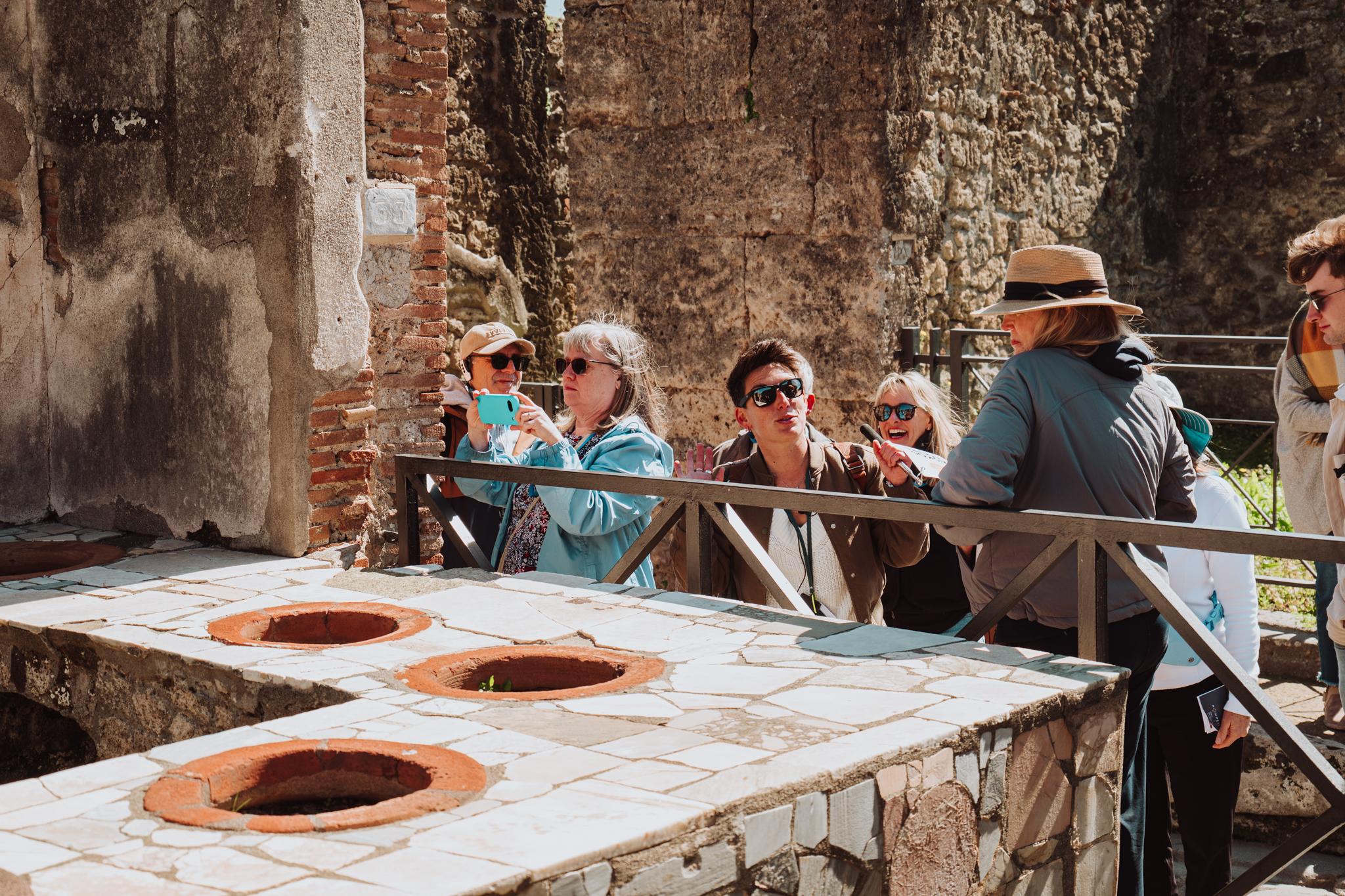
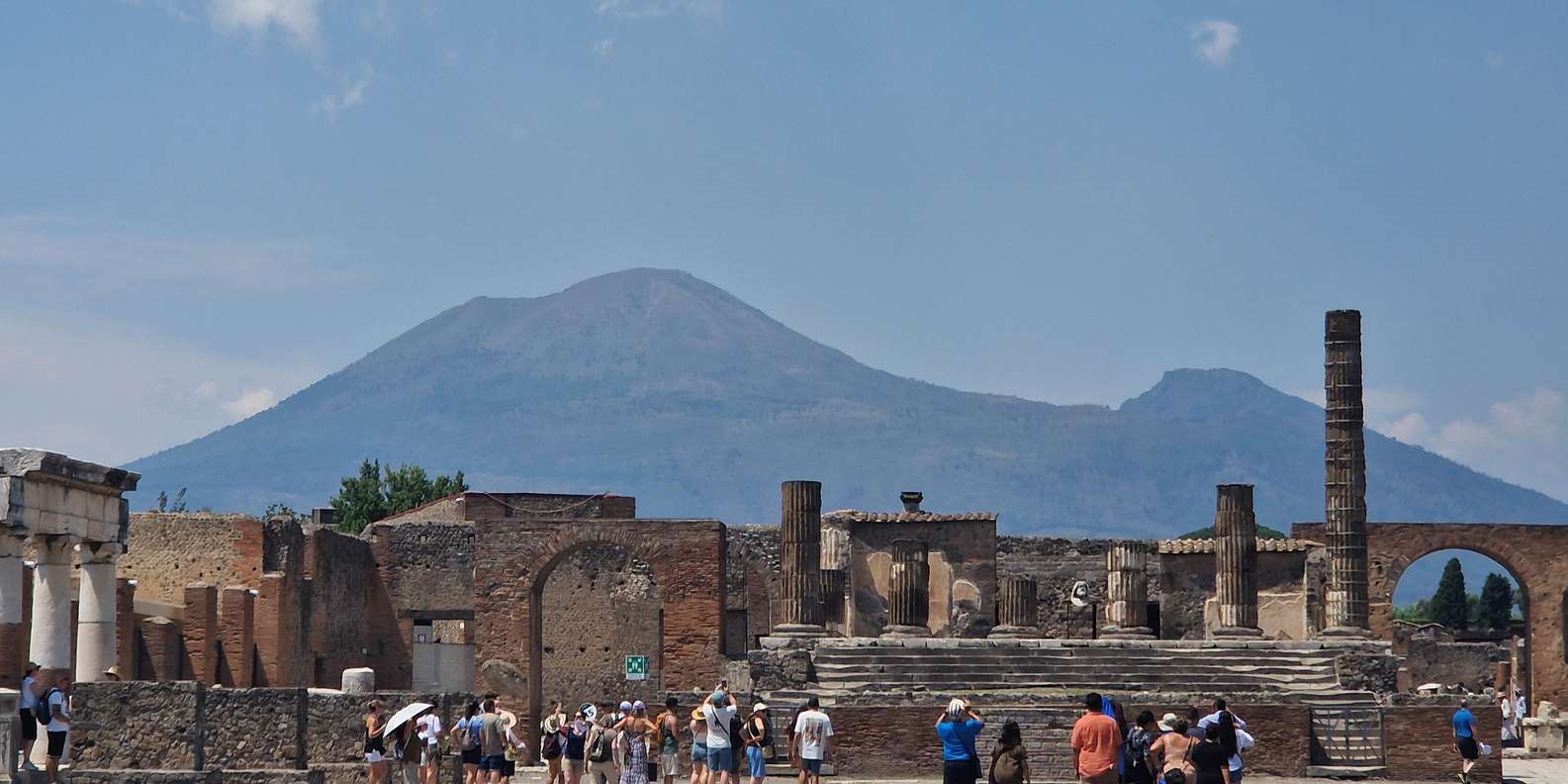
Pompeii is not a building, it is a city — 66 hectares inside the walls, most of it dug out. Without a route you will walk a lot of empty street. The guided walk here is two hours and takes in the Forum, the Forum Baths, the Lupanar, the bakery, the House of the Faun, a thermopolium and the plaster casts, then hands you back to the minibus rather than the ticket queue.
Photo Gallery
What the Day Puts in Front of You
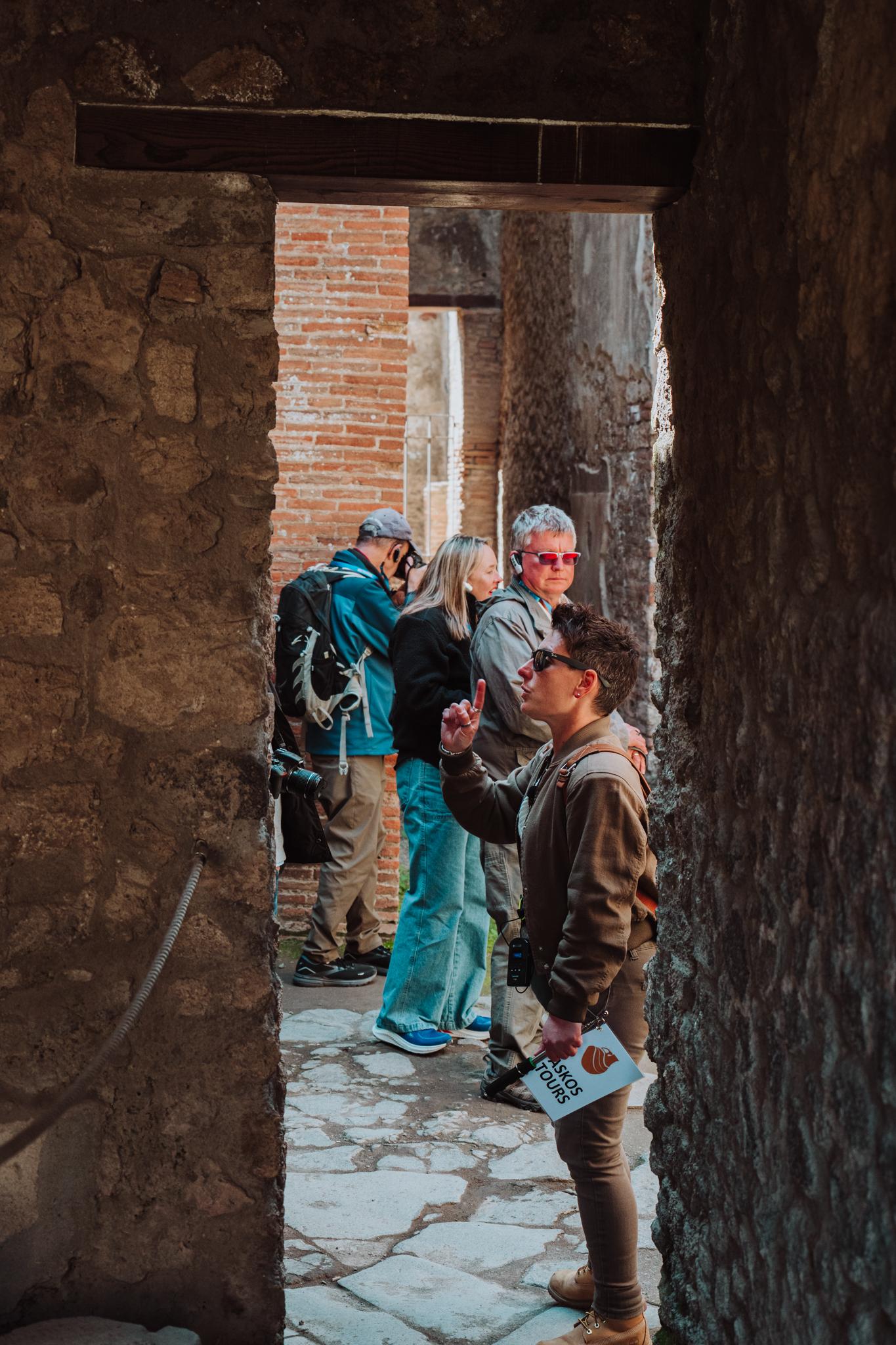
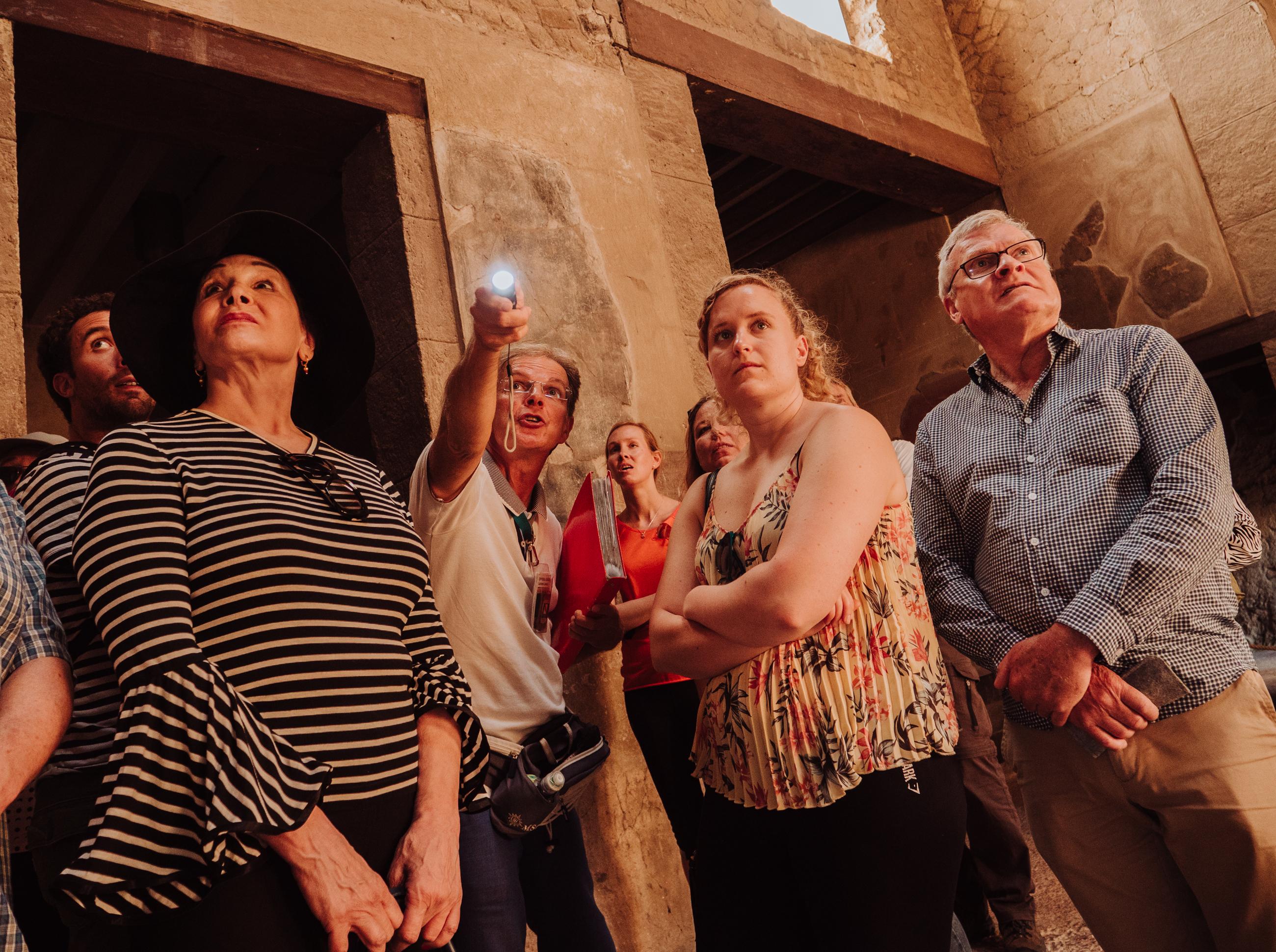
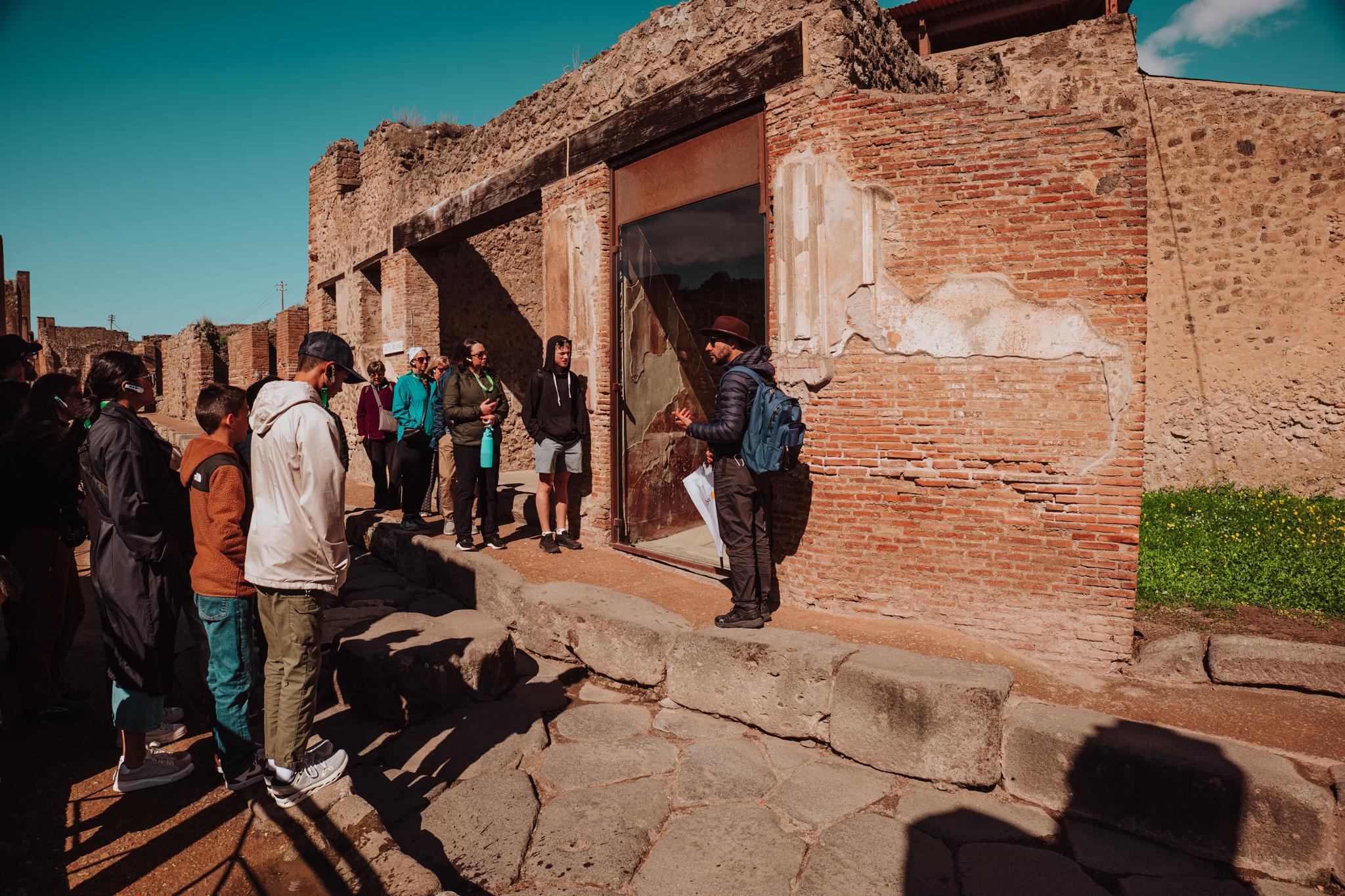
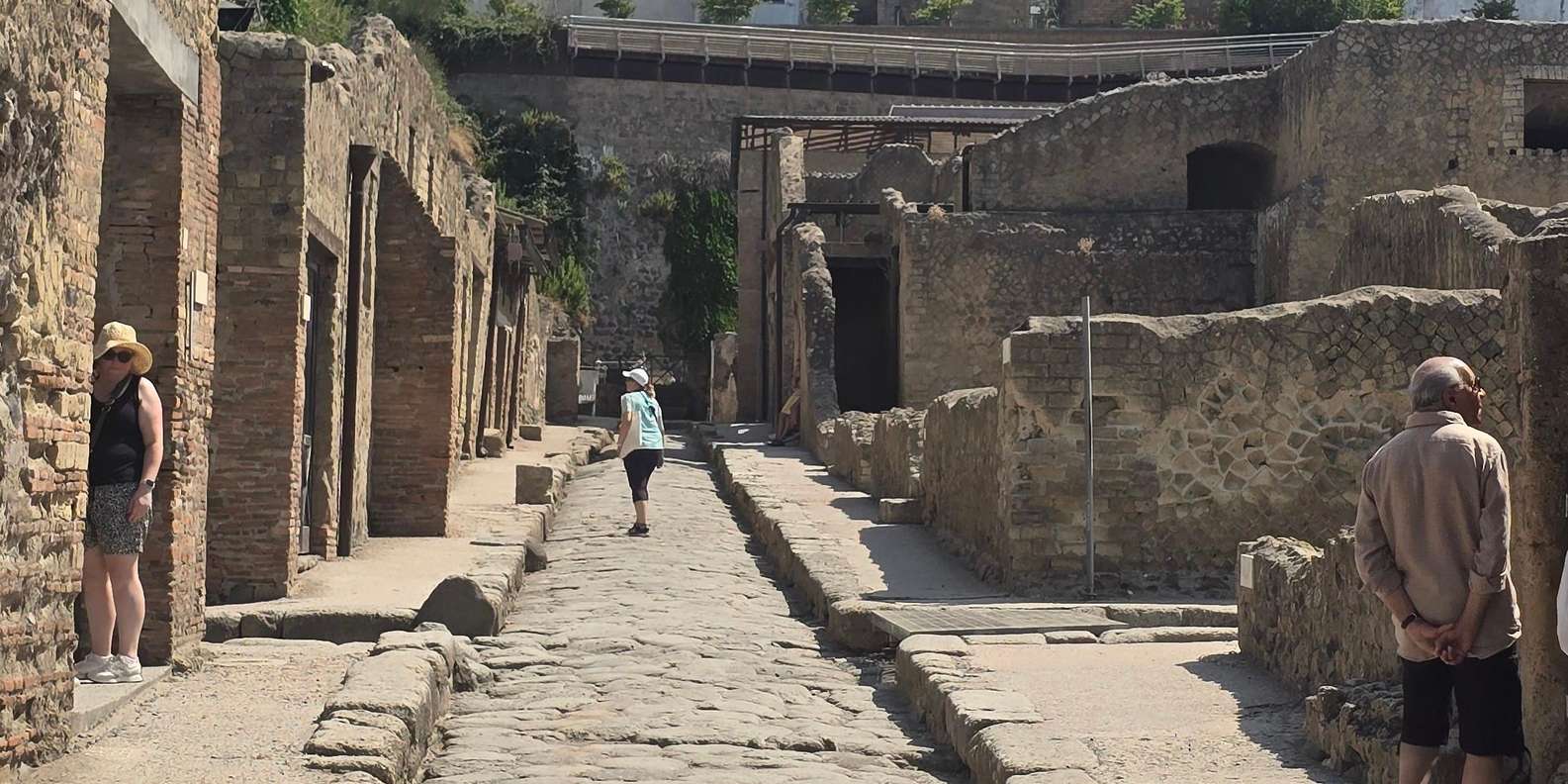
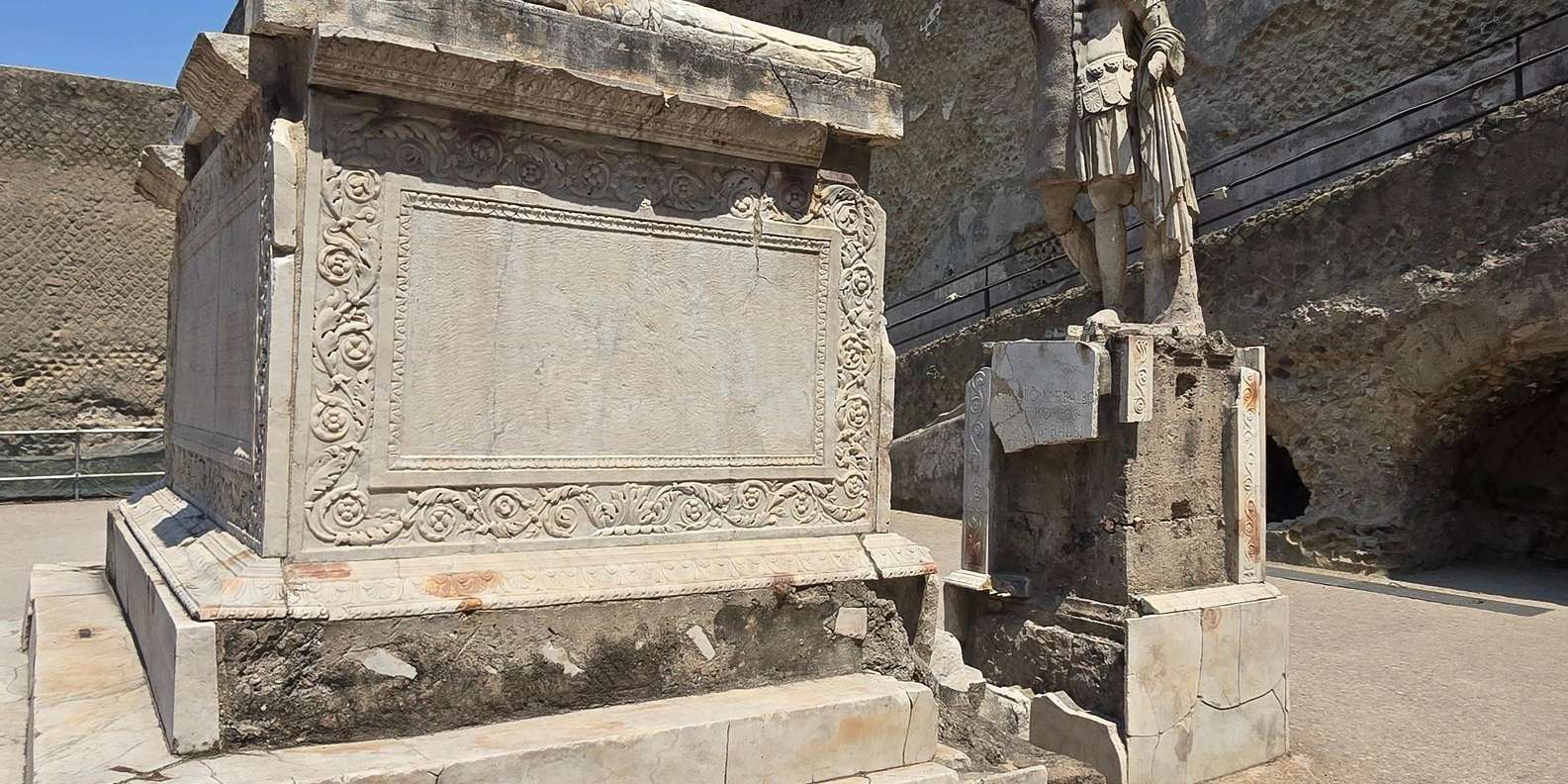
Pompeii's forum under Vesuvius, the plaster casts, and the carbonised timbers and painted walls that survive at Herculaneum and nowhere else.


Book Your Experience
Check Availability & Prices
Select your preferred date and time. Instant confirmation — free cancellation up to 24 hours before departure.
Three Ways to Do It From Rome
Two of them put you on the same high-speed train and differ mainly in what happens at lunchtime. The third is what most Rome day-trippers actually end up booking, and it does not include Herculaneum at all — which is worth knowing before you click.
| Feature | BOTH CITIES Train + Both Sites | Train + Both Sites + Lunch | Rome Day Trip, Pompeii Only |
|---|---|---|---|
| Starting Price | From $236/per person | From $202 per person — cheaper than the headline option, with a meal added | From $97 per person, the cheapest way out of Rome by a wide margin |
| Do You Get Herculaneum? | Yes — two guided hours at Pompeii and two at Herculaneum, the pair in one day | Yes — same two-site structure, same operator category, lunch folded in | No. This one trades Herculaneum for the Amalfi Coast and Sorrento |
| How You Travel | High-speed train from Roma Termini to Napoli Centrale — the operator puts the run at 70 minutes — then minibus between the sites | Same high-speed rail pattern from Rome, with ground transport in Campania | Road coach the whole way, which is why it is cheap and why it is long |
| Reviews Behind It | 4.8 from 460 verified reviews | 4.9 from 205 verified reviews — the highest rating of the three, on the shallowest sample | 4.6 from 9,809 verified reviews — by far the deepest sample on this page |
| What It Costs You | A long day. You are adding roughly two and a half hours of rail to a visit that already fills a day | The same long day, plus a fixed lunch stop that has to fit the schedule | Herculaneum, and a lot of hours in a seat. Three destinations in a day means shallow time at each |
| Best For | Travellers based in Rome who came for the archaeology and want both cities properly | Anyone who would rather not solve the lunch problem in a Campanian summer | First-time visitors who want coastline and ruins in one hit and are not attached to Herculaneum |
| Booking Ahead | Yes — Pompeii runs a 20,000-a-day cap with named tickets and a capped morning slot | Yes, same reason, and the meal reservation tightens the schedule further | Yes. It is the most-booked Rome day trip in this data set, which is exactly why it fills |
| Check Availability | See the Lunch Version | See the Coach Day Trip |
More Options
Other Ways to Do It From Rome
The lunch version, the Pompeii-only day trips, and the two Naples-based options that become cheaper and shorter the moment you decide to move hotels.
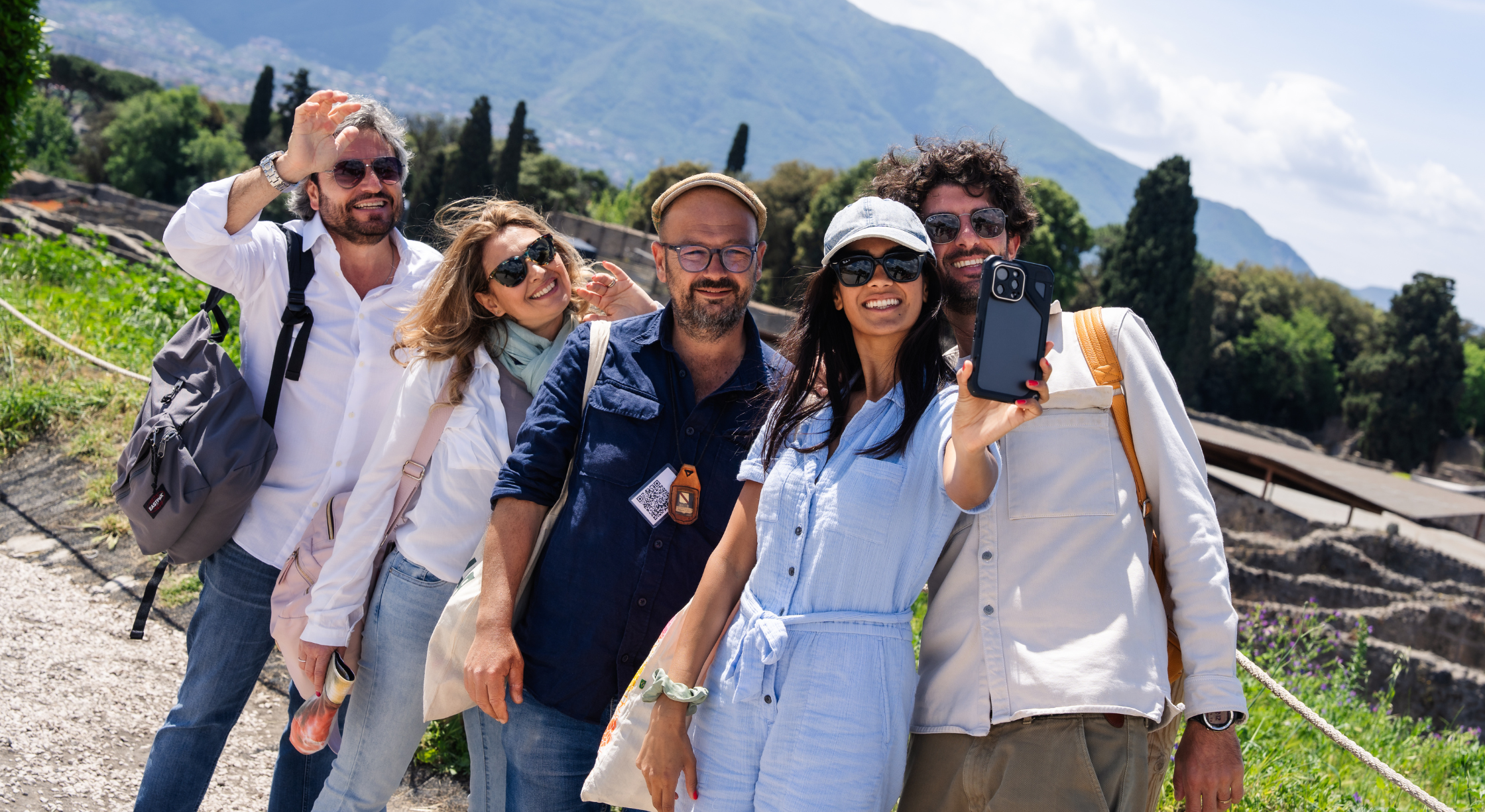 WITH LUNCH
Pompeii & Herculaneum by High-Speed Train from Rome & Lunch
After checking in at Termini Station, relax and enjoy the views on the scenic ride to Naples. As you get off the train in Naples, meet your local tour guide and head …
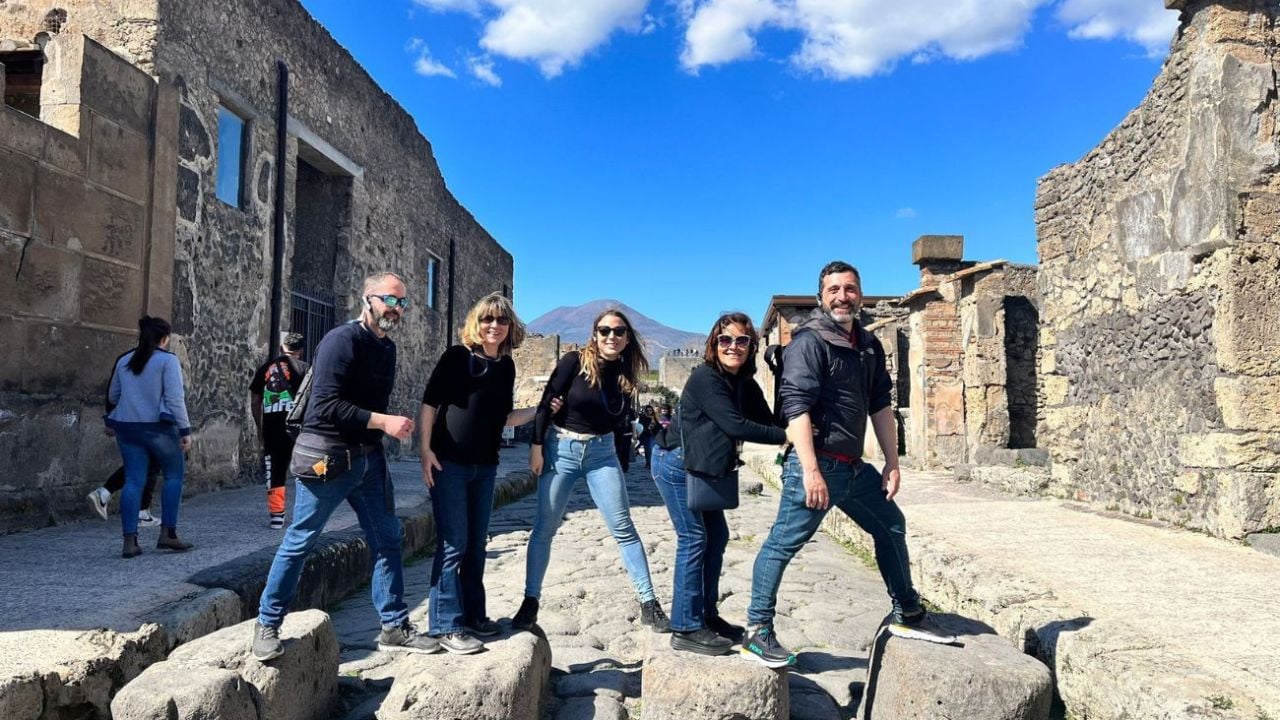 POMPEII ONLY, FROM ROME
Rome: Pompeii Tour with Wine and Lunch by High Speed Train
Most day trips to Pompeii from Rome take 12 or more hours and involve 6 to 8 hours sitting on a cramped bus. Our all-inclusive tour by high-speed train will have you …
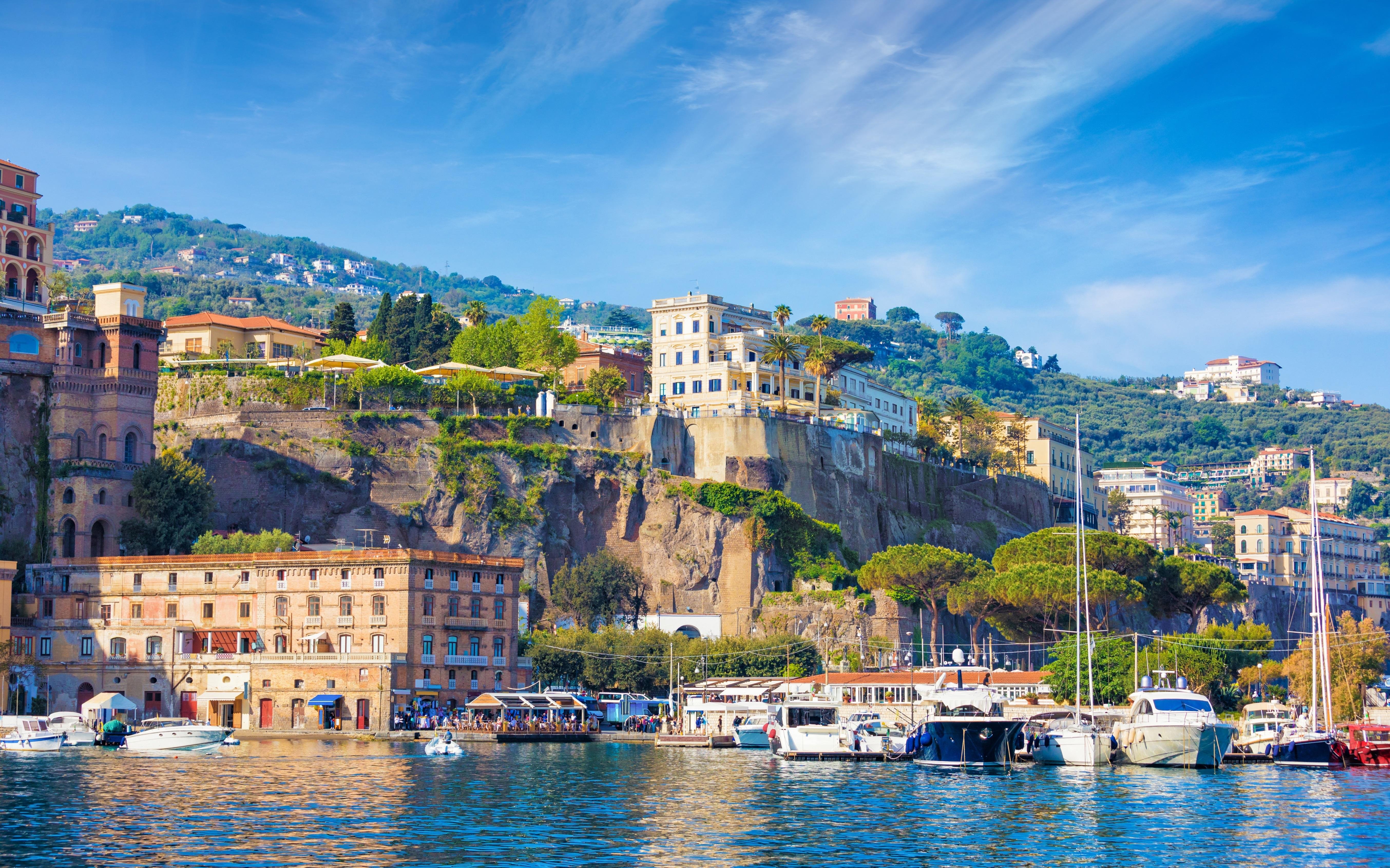 MOST REVIEWED FROM ROME
From Rome: Pompeii, Amalfi Coast, and Sorrento Day Trip
Embark on a journey from Rome to the captivating wonders of Pompeii, Sorrento, and the enchanting Amalfi Coast on this guided day trip. Hop on a comfortable coach at …
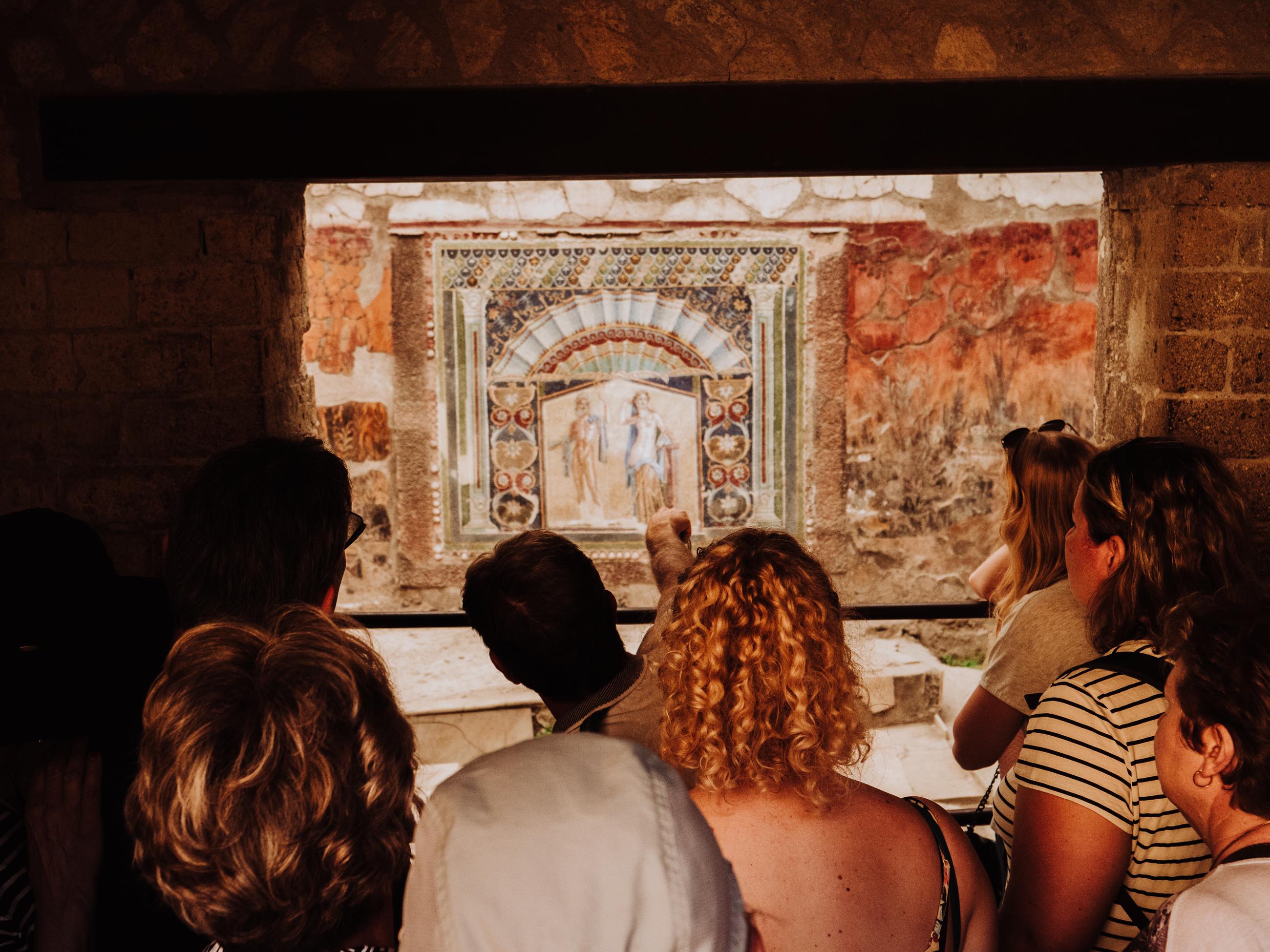 IF YOU MOVE TO NAPLES
From Naples: Pompeii & Herculaneum with Archaeologist Guide
Experience an unforgettable shore excursion from Naples including a group tour in Pompeii and Herculaneum led by an expert Archaeologist guide. See the major …
 MEET AT POMPEII
Pompeii: Small-Group Tour of Pompeii and Herculaneum
This tour consists of a pleasant walk around the ancient Roman cities of Pompeii and Herculaneum, buried by the ashes of the volcano Vesuvius in 79 A.D. Your tour …
 POMPEII ONLY
Pompeii: Entry Ticket and Guided Tour with an Archaeologist
Join a small group tour through the captivating ruins of Pompeii, which was buried in 79 AD by the eruption of Mount Vesuvius. This 2-hour walking tour is led by an …
The Rome Departure
What a Rome Day Trip to Pompeii and Herculaneum Really Costs You
Not the fare — the hours. Rome is the one origin where the honest answer sometimes is: move south for a night.
Rome to Pompeii is 234 km. That single number explains everything else about this trip, including why it costs roughly twice what the same tour costs from Naples and why the reviews for it read differently.
It is entirely doable — hundreds of people do it every day and rate it 4.8 — but it is a twelve-hour day, and there are two points where it is worth stopping and asking whether a different plan would serve you better. This page is about the arithmetic, not the sales pitch.
What the day actually looks like
The featured departure works like this, per the operator’s own itinerary: high-speed train from Roma Termini to Napoli Centrale, which it puts at 70 minutes; van to Pompeii, 30 minutes; two guided hours at Pompeii; a 50-minute break at a shopping mall on the way; 30 minutes by minibus to Herculaneum; two guided hours at Herculaneum; van back to Naples; train home.
Add it up and you get roughly two and a half hours on rails, an hour and a half in road vehicles, and four hours actually inside the ruins. The archaeology is a third of your day. Everything else is logistics — which is exactly why the guiding and the pre-held entry tickets matter more on this departure than on any other.
The trains, and the one that goes direct
Rome to Naples is one of the best-served rail corridors in Europe, and both operators run it.
- Trenitalia Frecciarossa: “poco più di un’ora” on the operator’s own page, with the fastest paths at 56 minutes and typical journeys around 1h00 to 1h13. Over a hundred connections a day, with Rome departures from 07:00 to 22:35.
- Italo: 55 minutes average, 31 trains a day in each direction, fares advertised from €14.90.
Both land at Napoli Centrale, from which the tour’s own ground transport takes over.
And then there is the one nobody knows about. Trenitalia runs a direct Frecciarossa from Roma Termini to Pompei — but only on Sundays. The operator’s page says ogni domenica, year-round. Outbound leaves Roma Termini at 08:53 and reaches Pompei around 10:40 to 10:45 — call it an hour and fifty minutes; Trenitalia’s page still quotes the 1h47 from the service’s 2023 launch, while the operating timetable paths it a few minutes longer. The return, FR 9568, leaves Pompei at 18:40 and reaches Rome at 20:55.
If your Rome trip contains a Sunday, that train changes the shape of this day considerably — one seat, no change at Naples, and a station a short shuttle ride from the park. It is the single most useful piece of information on this page and it is buried on a Trenitalia sub-page almost nobody finds. We could not verify its current fare: the only figure that exists anywhere is €29.90 Super Economy, quoted at the 2023 launch, and we are not going to print a three-year-old price as though it were today’s. Check it directly.
One caveat: the service is described as running except during holiday periods, and Trenitalia does not name those dates. If you are travelling around Easter, Ferragosto or Christmas, confirm before building a Sunday around it.
Doing it independently from Rome
Perfectly possible, and the connection you need is not the one people expect.
| Leg | Time | Notes |
|---|---|---|
| Roma Termini → Napoli Centrale | ~1h | Frecciarossa or Italo, 100+ and 31 services a day |
| Napoli Centrale → Pompei Scavi (Circumvesuviana) | 29–36 min, €3.30 | Lands opposite Porta Marina |
| Napoli Centrale → Pompei (Trenitalia) | ~26 min, €3.30 | Lands in the modern town — add the shuttle |
| Pompei FS station → the park (Pompei Link) | ~15 min, €1.50 | 15 runs a day. Last return 17:50 |
| Pompei Scavi ↔ Ercolano Scavi | 20 min, every run | The one wholly predictable leg of the day |
Two traps in that table. The first is that Napoli Centrale has two entirely different ways to reach Pompeii and they arrive at opposite ends of the ancient city: the Circumvesuviana puts you at Porta Marina, the national rail line puts you in the modern town near Piazza Anfiteatro. The second is the Pompei Link’s last return bus at 17:50 — if you route via the Trenitalia station, that time, not the site’s closing time, is the real end of your day.
And the Circumvesuviana comes with a warning. EAV publishes its own monthly report of cancellations and delays over fifteen minutes; its live departure board on a normal summer afternoon shows trains running thirty-four to forty-five minutes late. On a day that ends with a booked high-speed seat back to Rome, that is not an abstract risk. It is the clearest argument on this page for letting an operator own the ground transport.
The two moments worth reconsidering
Moment one: would a night in Naples be better? If you would otherwise spend five hours of a single day on trains, one night in Naples converts this into a relaxed morning and buys you the city as well — the archaeological museum in Naples holds the mosaics and frescoes lifted out of both sites, including the House of the Faun material, so it genuinely completes the visit rather than padding it. From a Naples base the same tour costs about $134 rather than $236 and gives you your evening back. Our from Naples page lays out those departures.
Moment two: is Herculaneum worth the extra hours, or should you do Pompeii alone? Rome runs plenty of Pompeii-only day trips at noticeably lower prices, and they exist because dropping the second site takes real pressure off the schedule. Our honest answer is that Herculaneum is the reason to take the combined tour, not the bonus attached to it. It is where the upper floors, the carbonised timber, the doors and furniture and the painted walls survive — none of which exists at Pompeii, because Pompeii was crushed by falling pumice while Herculaneum was sealed by mud. And since 15 July 2026 the reopened Galleria Martusciello, a passage of over a hundred metres, has restored the direct route down to the ancient shoreline and the vaulted boat sheds where the skeletons of the fugitives lie. That is the most affecting thing at either site, and it was hard to reach until this summer.
What the price includes, and what it does not
Per the operator’s own listing, the featured departure covers the round-trip high-speed rail from Rome, ground transport in Campania, entrance tickets to both sites, guided tours with an archaeologist at each, headsets, and a welcome kit. Meals and hotel pickup are excluded.
Worth knowing about that entrance ticket: it is the “Pompeii Express”, which is Pompeii’s own €20 admission to the ancient city and excludes the suburban villas — so Villa dei Misteri is not part of the visit. Herculaneum’s is the standard €16 ticket. Both parks charge EU citizens aged 18 to under-25 just €2, and under-18s of any nationality go free — which does not reduce a tour price, but is worth knowing if you are comparing against doing it yourself.
And the reason pre-held tickets matter more than they used to: Pompeii caps entries at 20,000 a day and issues named, personal tickets, with the summer day split into a 15,000-person morning window (09:00–13:00) and a 5,000-person afternoon one (13:00–17:30). A cancelled entry on a day you have already spent €100 of rail fares reaching is a bad afternoon.
Practical notes for a Rome-based day
- Take the earliest departure you are offered. The heat is the constraint, not the daylight — reviewers of this exact tour describe July days at 40°C, and one wrote plainly that it is a long day to do both sites in that weather.
- The operator puts the walking at about a mile at Pompeii and half a mile at Herculaneum, on Roman paving. The park itself warns about irregular surfaces. Wear real shoes.
- Bring photo ID — the operator asks for a passport or ID card.
- Leave your luggage in Rome or in a station deposit. The operator says explicitly that minibus luggage space is not guaranteed.
- Neither this tour nor its siblings are suitable for wheelchair users or people with mobility impairments — the listings say so directly. The parks run their own accessible routes; contact them instead.
So should you book it?
- Your trip is Rome-shaped and you want both cities properly? Book it, take the earliest train, and accept the twelve hours.
- Your Rome days include a Sunday? Look at the direct Frecciarossa to Pompei before anything else — it removes the change at Naples entirely.
- You could move hotels for a night? Do. The same day from Naples costs about $134 instead of $236 and hands you an evening back.
- You would rather not solve lunch in a Campanian summer? There is a version of this tour with a meal built in — see the comparison above.
- You are not attached to Herculaneum? The cheapest and most-booked way out of Rome trades it for the Amalfi Coast and Sorrento. It is a different holiday, but it is honest to say it exists.
We are not affiliated with either archaeological park. This is an independent visitor guide with no affiliation to, endorsement from, or connection with the Parco Archeologico di Pompei, the Parco Archeologico di Ercolano or the Italian Ministry of Culture, and we use no park emblem or state insignia. Tours and tickets shown here are sold by GetYourGuide, and we earn a commission if you book through our links at no extra cost to you.
How these facts were checked
Written 4 August 2026.
- Rome–Naples rail figures are from Trenitalia’s own route page (“poco più di 1h”, over 100 connections a day, departures 07:00–22:35) and Italo’s (55 minutes average, 31 services a day each way, from €14.90). We could not obtain a current Trenitalia fare range — the route page is script-rendered and returned no prices — so none is printed here.
- The direct Roma–Pompei Frecciarossa is confirmed on Trenitalia’s own page as running ogni domenica. The 08:53 departure and 18:40 return are Trenitalia’s; the arrival is quoted as 10:40 on that page and 10:45 in the operating timetable, which is why we give a range rather than a single time. Its 2026 fare is not published anywhere we could reach; the €29.90 still circulating dates from the 2023 launch. The blackout dates are described as “holiday periods” and are not named by the operator.
- Pompei Link — €1.50, about 15 minutes, 15 runs a day, last return 17:50, operated by Eredi d’Apice/COSAT rather than Busitalia — is from Trenitalia’s own Pompei Link page.
- Circumvesuviana times and the Napoli–Pompei regional times are from EAV’s L1 timetable valid 28 March 2026 and RFI’s live departure board; fares are from Trenitalia’s Campania regional tariff schedules, where Pompei is confirmed as Fascia 3 at €3.30.
- Gate prices, the 20,000-a-day cap, the named-ticket rule and the slot split are from pompeiisites.org; the Herculaneum price and the Galleria Martusciello reopening on 15 July 2026 are from ercolano.cultura.gov.it.
- A Campania-wide fare rise of 5.8% was approved on 30 June 2026 but the per-fare figures had not been published when this was written. Every euro figure here is the one currently in force.
- The 70-minute train figure, the itinerary timings, the walking distances, the ID requirement and the luggage warning are the operator’s own, taken from its listing rather than measured by us.
- Tour prices, ratings, review counts and reviewer quotes come from the booking platform’s own listings, captured in 2026, and change over time.
Guest Reviews
What Rome Day-Trippers Say
4.8/5
from 460 verified guests
"Really interesting with great guides. The tour was well organized, fun and we learned a lot too!"
"I want to thank Our guide, Amadeo. He was absolutely wonderful. Unfortunately, my daughter got sick and he was kind enough to have the driver drop us off at a mall while he attended the rest of the clients through Pompeii. We did manage to see Herculaneum and he was so incredible knowledgeable and so passionate. It made me sad to have to miss Pompeii but was so appreciative of how accommodating he was. He is certainly an asset to this company."
"Great transport organization and a wonderful guide. Highly recommended for those who don't have much time to organize the trip and search for information on their own, and for anyone wanting to visit both Pompeii and Herculaneum in a single day."
"It’s a long day to visit Herculaneum AND Pompeii on a hot Italian day in July, but Raphael made it an enjoyable and educational visit!"
"This tour was really well planned. We started with herculaneum and then did Pompeii, so we avoided the crowds. The guide Michele was very helpful and knowledgeable. The driver Vincenzo was great and the transport by train was easy. Really good tour and was worth it for me!"
"Everything was great! Our guide was knowledgeable, enthusiastic and friendly. I felt safe and comfortable with him."
"Wonderful trip with an entertaining and knowledgeable guide."
Read all 460 verified reviews
See All ReviewsOne Train, Two Buried Cities, One Day
Round-trip high-speed rail from Roma Termini, ground transport in Campania, both entrance tickets and an archaeologist at each site — rated 4.8/5 by 460 verified guests, with free cancellation up to 24 hours before departure. Pompeii caps entries at 20,000 a day and splits the morning slot, so the good dates go early. Starting from $236 per person.
Check Availability & BookCan't Make These Dates?
Browse More Available Options
Find a tour that fits your schedule — all with instant confirmation and free cancellation.
Pompeii and Herculaneum From Rome — FAQ
How long the train really takes, the direct Sunday Frecciarossa almost nobody knows about, and when a night in Naples is the better answer.
About an hour to Naples on a high-speed train, and then another half hour on the ground — so roughly 90 minutes to two hours door to gate, and two and a half hours of pure rail across the round trip. Trenitalia describes Roma Termini to Napoli Centrale as poco più di un'ora, with the fastest paths at 56 minutes and typical journeys between 1h00 and 1h13; Italo advertises a 55-minute average. Trenitalia runs over a hundred connections a day on the corridor and Italo 31 in each direction. From Napoli Centrale, the Circumvesuviana reaches Pompei Scavi in 29 to 36 minutes for €3.30, or a Trenitalia regional reaches the modern-town station in about 26 minutes. The featured tour puts its own train leg at 70 minutes and its road leg at 30.
Yes — a direct Frecciarossa, and it runs on Sundays only. This is genuinely the most useful and least known fact about doing Pompeii from Rome. Trenitalia's own page describes it as running ogni domenica, year-round. The outbound leaves Roma Termini at 08:53 and reaches Pompei around 10:40 to 10:45 — call it an hour and fifty minutes; Trenitalia still quotes 1h47 from the service's 2023 launch while the operating timetable paths it slightly longer. The return, FR 9568, leaves Pompei at 18:40 and reaches Rome at 20:55. Two caveats: the service is described as not running during holiday periods and Trenitalia does not name those dates, and we could not find a current 2026 fare anywhere — the €29.90 figure still circulating online is the 2023 launch price and we are not going to reprint it as though it were today's. Check directly before planning a Sunday around it.
Yes, once — provided you accept that it is a twelve-hour day and that roughly a third of it is spent actually inside the ruins. The arithmetic is unforgiving: two and a half hours on rails, an hour and a half in road vehicles, four hours in the archaeology. That is not a criticism of the tour; it is the geography of a 234-kilometre gap. What makes it worth doing anyway is that Pompeii and Herculaneum are not interchangeable with anything in Rome — Rome gives you monumental architecture, and these two give you domestic life, streets, shops, bakeries, furniture and painted rooms that stopped in a single afternoon in AD 79. If your trip is Rome-shaped and this is your only chance at Campania, take the earliest departure offered and go.
If you can move hotels for one night, do — the same two-site tour costs about $134 from Naples against $236 from Rome, and it hands you back an evening. Rome-based day trips exist because people's itineraries are fixed, not because the arrangement is efficient. One night in Naples turns a twelve-hour endurance day into a relaxed morning, and it buys you the city's archaeological museum, which holds the mosaics and frescoes lifted out of both sites — including the House of the Faun material. Seeing the objects and then the rooms they came out of completes the visit rather than padding it. Our from Naples page compares those departures properly. If your dates genuinely cannot move, the Rome tour is a good product and rates 4.8 from 460 verified reviews.
Yes — two guided hours at each, with entrance tickets to both sites included, and it is the reason to take this tour rather than a cheaper Pompeii-only day trip. Per the operator's listing you get round-trip high-speed rail from Rome, ground transport in Campania, tickets for both parks, an archaeologist at each, headsets and a welcome kit; meals and hotel pickup are excluded. Be aware that plenty of Rome day trips advertised alongside this one are Pompeii-only — the most-booked one in this data set trades Herculaneum for the Amalfi Coast and Sorrento. That is a different holiday, not a cheaper version of the same one. Herculaneum is where the upper floors, carbonised timber, doors, furniture and painted walls survive, because it was sealed by mud rather than crushed by falling pumice.
At the gate: Pompei Express €20 for the ancient city, Pompei+ €25 if you want the suburban villas, Herculaneum €16, and €2 at either park for EU citizens aged 18 to under-25, with under-18s of any nationality free. There is no state-issued combined ticket — they are two separately administered parks. The admission bundled into this tour is the €20 Express, which excludes the suburban villas — so Villa dei Misteri is not part of the visit. Everything else in the tour price is the round-trip rail from Rome and the ground transport in Campania, which is where most of the difference from a Naples-based tour actually sits.
Yes, and more carefully than from anywhere else, because you have already spent a lot of money and time getting there before the gate is even a factor. Pompeii publishes a hard cap of 20,000 visitors a day and issues named, personal tickets; between 16 March and 14 October the day is split into a 15,000-person morning window (09:00–13:00) and a 5,000-person afternoon one (13:00–17:30). Herculaneum has no equivalent cap. A booked tour holds the entry for you, which on a Rome day trip is worth considerably more than the same guarantee from a Naples hotel ten minutes up the line.
Yes, and the trap is which station you aim for. Take a Frecciarossa or Italo to Napoli Centrale, then choose: the Circumvesuviana reaches Pompei Scavi – Villa dei Misteri in 29 to 36 minutes for €3.30 and puts you opposite the Porta Marina entrance; a Trenitalia regional reaches the station called Pompei in about 26 minutes for the same fare, but that lands in the modern town near the Piazza Anfiteatro end, from where you need the Pompei Link shuttle — €1.50, about 15 minutes, 15 runs a day, and operated by Eredi d'Apice/COSAT rather than Busitalia as almost every guide claims. The hard constraint on that routing is the last return bus at 17:50, not the park's closing time. Add the 20-minute hop between the two sites and it is a workable plan for a confident traveller — but the Circumvesuviana publishes its own delay statistics, and a delay on the way back threatens a booked high-speed seat.
The best of it is at Herculaneum, and it is a genuine reason to prefer the two-site tour. On 15 July 2026 the park reopened the Galleria Martusciello, a scenic passage of over a hundred metres that reconnects the modern city level with the ancient shoreline and the fornici — the vaulted boat sheds where the skeletons of the fugitives lie. The shoreline itself came back in June 2024 after a long drainage and recovery project. At Pompeii, the Insula dei Casti Amanti is open on a raised walkway over the whole block, the Domus di Adone Ferito reopened in March 2026, and the recomposed frescoed ceiling of the Casa con Panificio was unveiled in July 2026 as part of the park's Dionysian programme for the year.
The operator puts it at about a mile at Pompeii and half a mile at Herculaneum, on Roman paving, and the park's own guide warns about irregular walking surfaces. Heat is the real constraint, not distance. Reviewers of this exact tour describe July days at 40°C; one wrote plainly that it is a long day to do both sites in that weather, and another credited their guide with finding shade and cool spots — including the museum at Herculaneum — through the afternoon. Take the earliest departure offered, bring water and a hat between May and September, and wear shoes with a real sole. The operator also asks you to bring photo ID and recommends leaving luggage in a station deposit, since minibus luggage space is not guaranteed.
No — the listing states directly that it is not recommended for people with limited mobility and not suitable for wheelchair users, and the same applies to its siblings. That is the tour format rather than the sites: Pompeii runs an accessible route called Pompei per tutti, extended again in 2026, and Herculaneum has its own accessibility provision. If mobility is a factor, contact the parks directly about their accessible routes and treat a long-distance small-group day trip as the wrong product.
No. This is an independent visitor guide with no affiliation to, endorsement from or connection with the Parco Archeologico di Pompei, the Parco Archeologico di Ercolano, the Italian Ministry of Culture, Trenitalia, Italo or EAV, and we use no park emblem or state insignia. Timetables, fares and gate prices quoted here are read from the operators' and parks' own published pages and change without notice — a Campania-wide fare rise of 5.8% was approved on 30 June 2026 with the per-fare figures still unpublished at the time of writing. Confirm on trenitalia.com, pompeiisites.org and ercolano.cultura.gov.it before you travel. The tours shown here are sold by GetYourGuide, and we earn a commission if you book through our links at no extra cost to you.
Still have questions? Email us at info@pompeiiandherculaneumtour.com